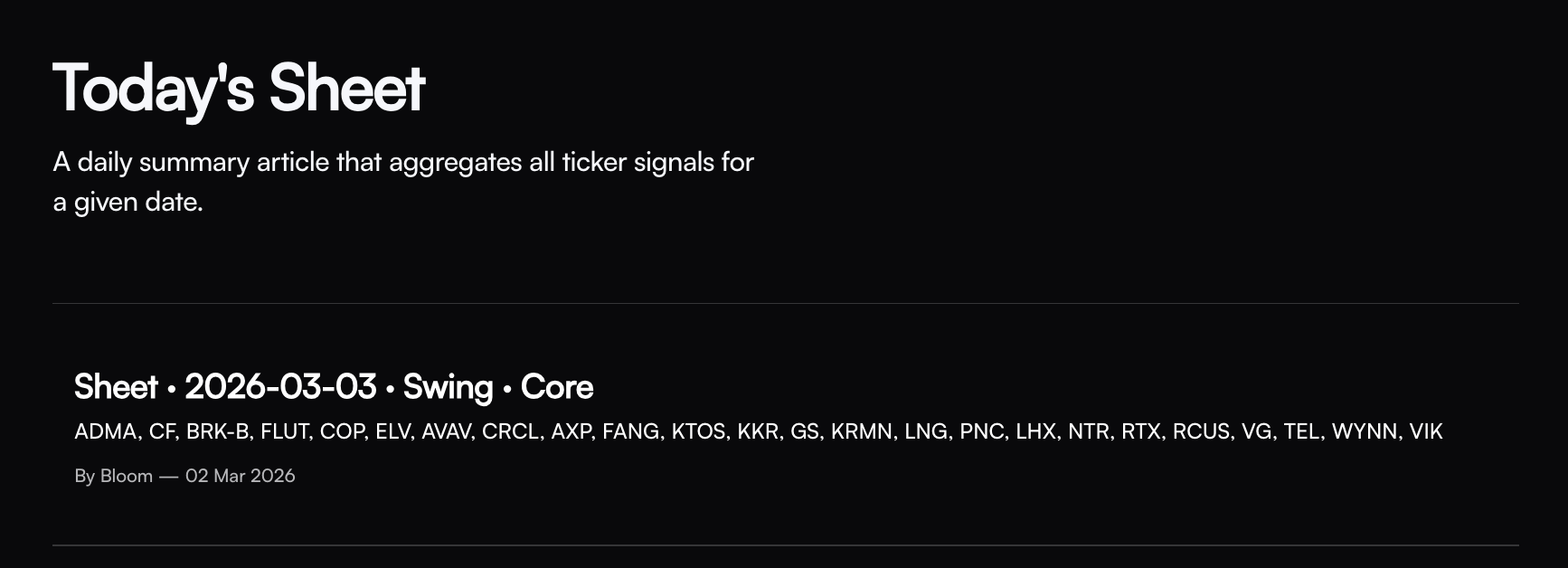
Today's Sheet : a daily summary article listEvery morning, coreopsis (signals for swing traders) hands you a curated list—typically 5–15 tickers—built from the model’s strongest signals for the day. It’s a short, ranked set of setups where the model sees the best combination of signal quality, consistency, and historically favorable risk-adjusted behavior.
What the list is (and isn’t)
Your watchlist is best thought of as a research briefing—a starting point for disciplined decision-making.
It is:
- A filtered set of opportunities where conditions resemble historically profitable swing setups
- A list that helps you prioritize attention
- A consistent format: entry zones, stops, targets, and context to support execution
It is not:
- A promise that every ticker will work
- A mandate to trade everything on the list
- A replacement for judgment, liquidity checks, or common sense
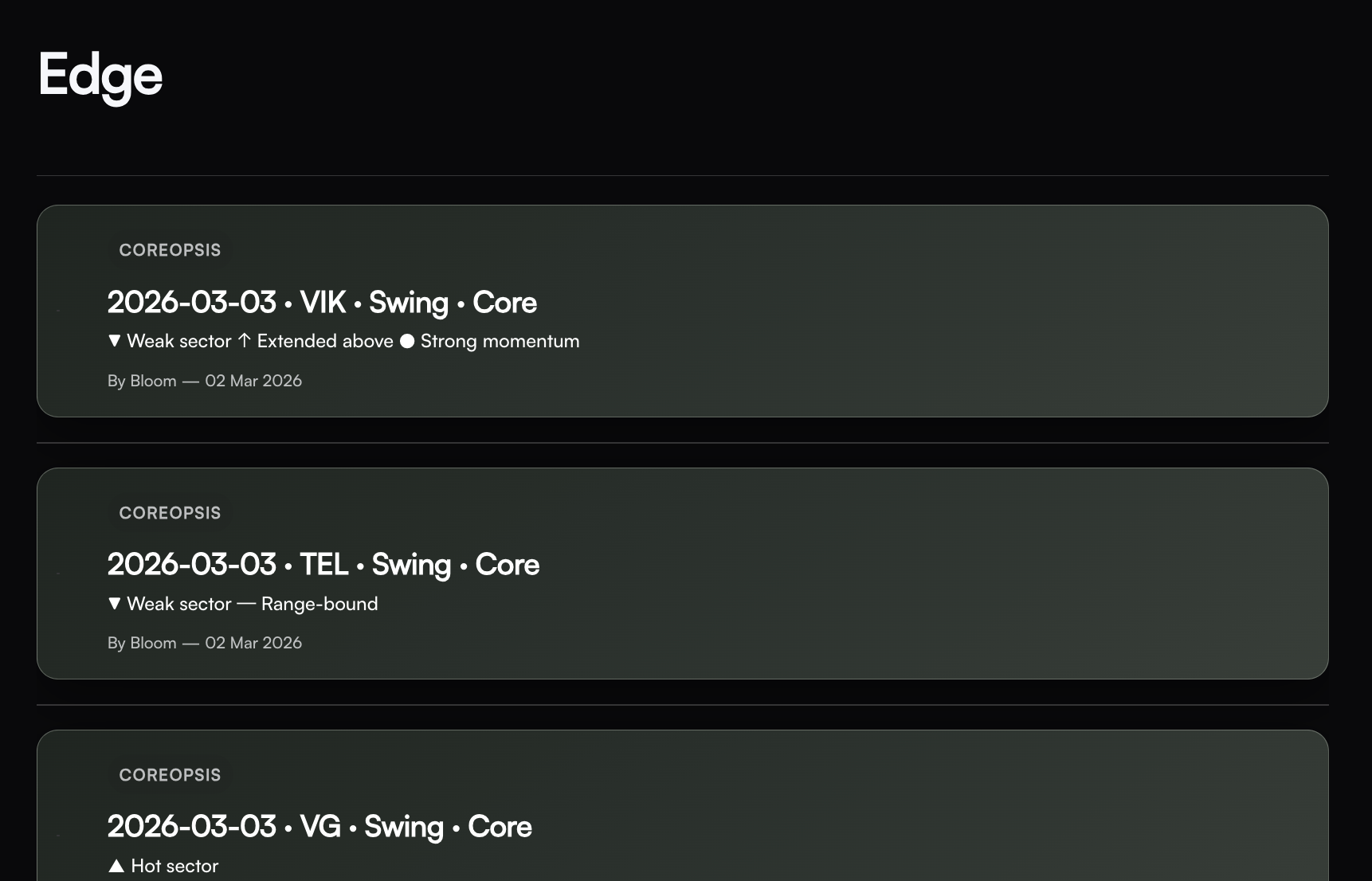
Edge : latest signals from all modelsWhy the number of tickers changes
Markets do not produce clean opportunities on a schedule. Some days are generous. Others are stingy. That variability is the point.
When you see 15 names, it usually means the market is offering plenty of setups that meet the model’s criteria. When you see 3–5, it means the opposite: fewer clean alignments, more noise, or conditions that historically reduce edge. There was one day in 2025 when we found zero signals but with more screening models added quarterly, this should become an extremely rare occurrence.
That’s why we don’t force picks to hit a quota.
Lean days are a feature because they:
- Reduce low-quality “filler trades”
- Encourage selectivity and patience
- Protect you from overtrading in choppy regimes
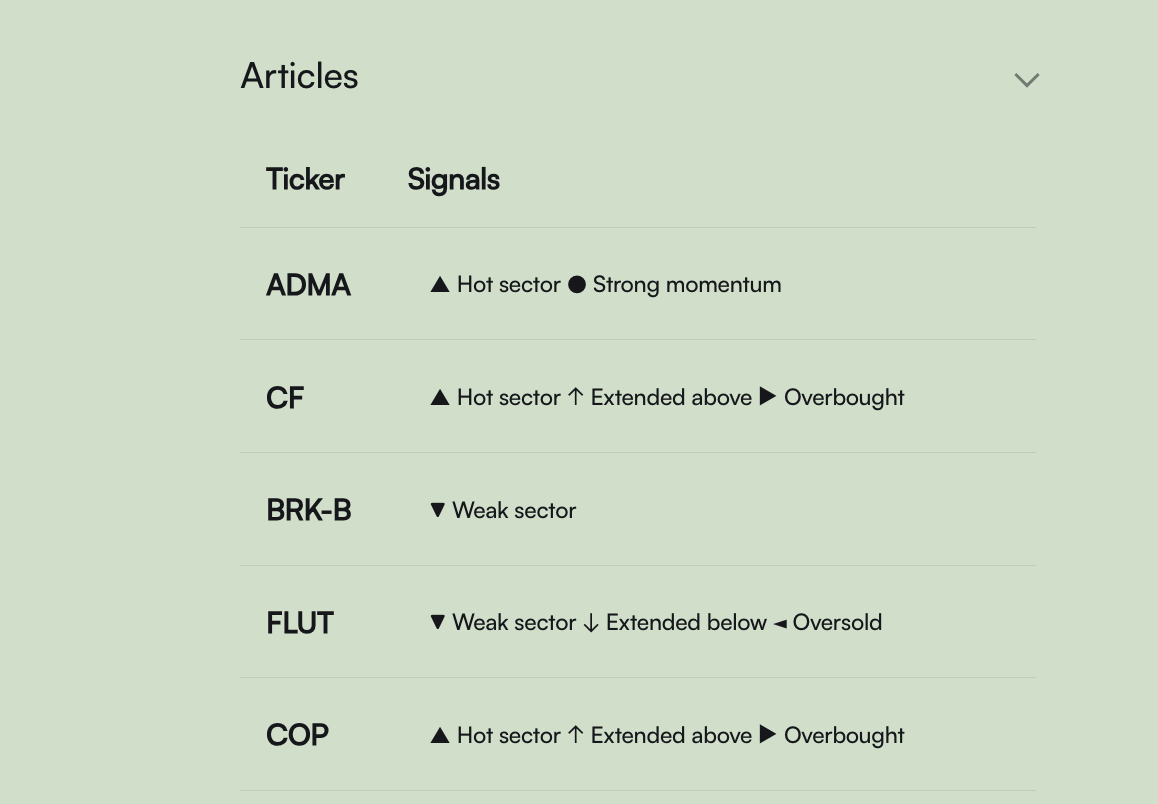
Sheet articles with ticker articles linked for easy browsingWhat “strongest signals” actually means
When we say “strongest signals,” we mean the model is seeing a combination of factors that historically correlate with higher-quality outcomes—things like direction reliability, volatility context, trend structure, and other features that tend to matter for 3–7 day swings.
Strong signals don’t mean “can’t lose.” They mean:
- The setup resembles past situations where trades were more likely to behave well
- The risk/return profile has historically been better than average
- The tiering reflects relative confidence within that day’s opportunity set
How to use the watchlist like a pro
The watchlist is a priority queue.
A clean daily routine looks like this:
- Scan the list and pick 2–4 names worth deeper review (not 15).
- Check liquidity and spreads (avoid getting mugged by slippage).
- Compare entry zones to current price action (don’t chase; let price come to you).
- Confirm risk fits your rules (position size, stop distance, max loss per trade).
- Choose the best one or two and ignore the rest.
The quiet benefit: consistency
Over time, the biggest advantage of a structured daily watchlist isn’t any single trade—it’s that you’re running the same process day after day:
- same inputs
- same presentation
- same decision points
- same risk framework
Consistency makes your results easier to evaluate, improves discipline, and turns your trading into a craft.
The bottom line
Your daily watchlist is meant to focus your attention on the best candidates, not create pressure to trade. If the list is lean, that’s the model telling you: today’s edge is scarce—protect your capital and wait for cleaner conditions.
You’re not here to trade every day. You’re here to trade when the odds are worth it.